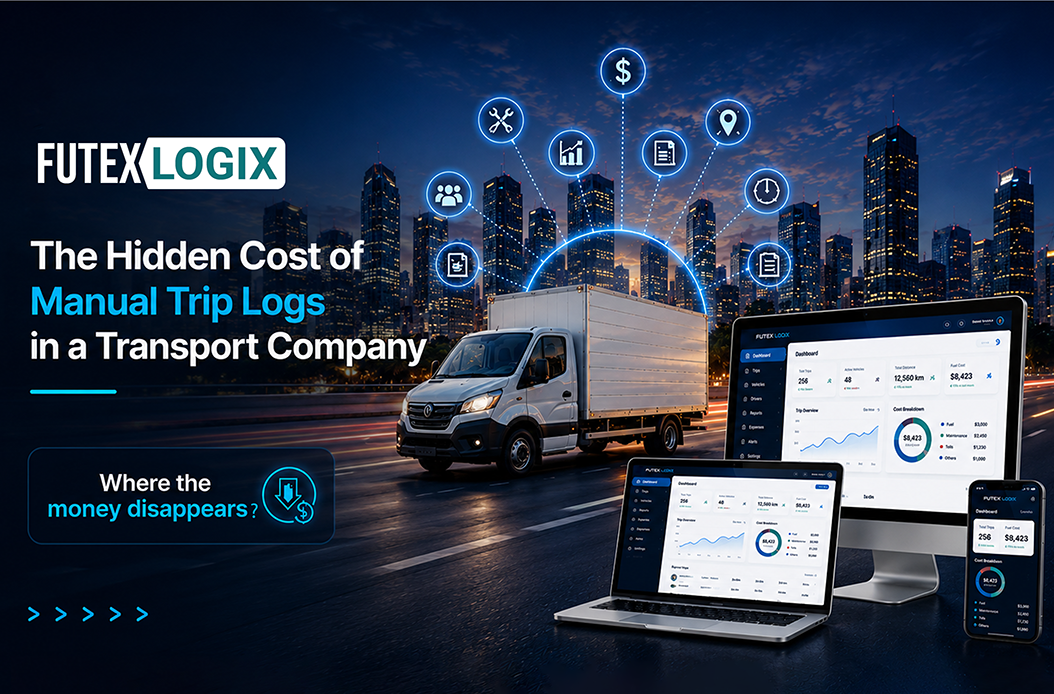
The Hidden Cost of Manual Trip Logs in a Transport Company
Most transport businesses know manual logs are inconvenient. What they don't know is what those logs are actually costing them in money, compliance risk, and driver trust.
Most transport businesses know manual logs are inconvenient. What they don't know is what those logs are actually costing them in money, compliance risk, and driver trust.
The Notebook on the Dashboard
Almost every transport company in Pakistan, UAE, and Saudi Arabia starts the same way. A driver picks up a trip sheet in the morning, fills in departure times, kilometres, fuel stops, and load details by hand, usually in a notebook, sometimes on a loose sheet, occasionally on a WhatsApp message to the dispatcher. It works.
Until it doesn't.
The problem with manual trip logs isn't just that they're slow to fill in. It's that every step that touches that piece of paper; data entry, invoice generation, dispute resolution, and compliance checking, multiplies the original inefficiency. By the time a manual log has been read, re-entered, filed, and occasionally lost, it has cost your business far more than a software subscription ever would.
Where the Money Actually Disappears
1. Billing Errors and Disputes
When trip data is recorded manually, invoices are generated from memory or rough notes. Kilometres get rounded. Waiting time gets forgotten. Fuel surcharges get missed. A transport company running 30 vehicles might lose between 5% and 12% of billable revenue every month simply because the person generating the invoice doesn't have accurate trip data in front of them.
On the other side, clients dispute invoices that look inconsistent. Resolving those disputes takes management time and sometimes results in credits that shouldn't have been given.
2. Fuel Leakage
Fuel is the largest variable cost in any fleet operation typically 30–40% of total running costs. Manual logs make it nearly impossible to cross-reference fuel consumption against actual distance travelled. Drivers know this.
Inflated fuel claims are one of the most common forms of petty fraud in transport businesses, and they're almost invisible without digital trip records tied to odometer readings.
3. Overtime and Ghost Shifts
Without accurate shift start and end times logged digitally, payroll is calculated on estimates. Drivers claim overtime that's difficult to verify. In a fleet of 20 drivers, even a modest over-claim per person per week adds up to a significant annual payroll leak.
4. Compliance Penalties
In the UAE and Saudi Arabia, vehicle compliance is not optional. Mulkiya renewals, insurance expiries, driver license renewals, and periodic inspections all have hard deadlines.
A manual system means someone has to remember these dates, and when they don't, the fines are immediate. In some GCC jurisdictions, an expired vehicle on the road can result in the vehicle being impounded and the company facing regulatory action.
5. Management Time
The hidden cost that never appears in a spreadsheet is the time your operations manager spends chasing trip sheets, resolving discrepancies, and manually building reports. In most mid-sized transport companies, this is anywhere from two to five hours a day, time that should be spent on growing the business.
With Futex Logix, billing disputes are easy to manage, fuel consumption is auditable, and the compliance calendar will run automatically with alerts sent before any deadline, not after.
How Futex Logix Solves Manual Trip Log Problems
With Futex Logix, billing disputes become easier to manage, fuel consumption becomes auditable, and compliance schedules run automatically with alerts before deadlines.
A modern transport ERP does not ask drivers to do more work; it allows them to complete the same tasks digitally through a simple mobile workflow.
What Digital Trip Logs Actually Look Like in Practice
A modern transport ERP doesn't ask drivers to do more work; it asks them to do the same work differently. Trip data is entered once on a mobile app at the start and end of each trip. That single entry then automatically flows into:
- Invoicing with distance, time, and surcharges calculated automatically
- Fuel reconciliation through actual litres versus kilometres driven
- Driver timesheets with shift start, end, and break times logged automatically
- Profitability reports per trip, vehicle, driver, and client
- Compliance dashboards with upcoming renewal and expiry alerts before they become problems
When Is the Right Time to Make the Switch?
Most transport business owners tell us they knew they needed a system two years before they actually got one. The hesitation is usually one of three things: cost, change resistance from drivers, or not knowing where to start.
On cost: the monthly cost of a transport ERP is typically recovered within the first 60 days through reduced billing errors and fuel leakage alone. The ongoing saving is orders of magnitude larger than the subscription.
On driver resistance: drivers adapt quickly when the app is simple. The key is choosing a system built for field workers, not one designed for office staff that's been forced onto a mobile screen.
Futex Logix is Futuresol Tech's transport ERP platform built for fleet operators, freight companies, and logistics businesses. It covers trip planning, driver timesheets, vehicle compliance, invoicing, and real-time reporting all in a single web and mobile platform. Learn more at futuresol.net/products/futex-logix
Futex Logix Transport ERP Platform
Manual trip logs are not a neutral choice. Every week you run on paper is a week of billing leakage, unverifiable fuel claims, compliance risk, and management overhead that a spreadsheet will never fully capture.
The good news is that the switch is not as complicated or expensive as most operators assume. The businesses that make it wonder why they waited.
If you're running a fleet and want to see what automated trip management looks like for your operation, Futex Logix is Futuresol Tech's transport ERP platform built for fleet operators, freight companies, and logistics businesses.
- Trip planning
- Driver timesheets
- Vehicle compliance management
- Automated invoicing
- Real-time reporting
All operations are managed through a single web and mobile platform. get in touch with the Futuresol team at futuresol.net.
Frequently Asked Questions
Move Beyond Manual Trip Logs
Reduce billing leakage, improve fuel visibility, automate compliance, and manage your fleet operations with Futex Logix transport ERP.
Request a Free Demo